New Clinical Trials for Hepatitis
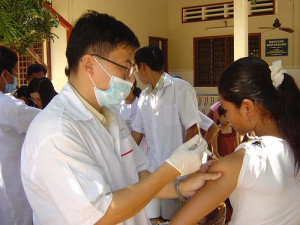 While much is known about the disease from years of hepatitis clinical studies, there is renewed hope that advances in genetic engineering and improved antiviral medications may help greatly improve hepatitis C treatments.
Please review the list of current hepatitis clinical trials. If you have suffered from either acute or chronic bouts of hepatitis we would like to hear from you. Clinical trials are always at no cost to you, but may go a long way in helping to better treat you and future patients.
What is Hepatitis?
Hepatitis is an inflammation of the liver. Acute cases can usually heal with no medical treatment; chronic cases left untreated can progress to fibrosis (scarring) and cirrhosis. Symptoms of hepatitis include jaundice (yellowing of the skin and eyes), loss of appetite and a general feeling of being out of sorts. A chronic case is said to last six months or more and may result in enlargement of the liver. A patient with chronic hepatitis often suffers flu-like symptoms. In cirrhosis, the most advanced form of hepatitis, patients bruise and bleed easily, their legs swell and they have an accumulation of fluid in the abdomen.
Hepatitis Treatments
Hepatitis has several very different causes and treatment depends on the diagnosis. Hepatitis A, B, C, D, and E are viral. An example of a non-viral cause of hepatitis is toxoplasma. Excessive alcohol use and many medications can also cause hepatitis. Acute cases of hepatitis can be treated with rest and giving the body time to heal. For chronic cases interferon may be prescribed. This is a protein that combats viruses in the body. Unfortunately, it is an expensive drug with many side effects and therefore not the most viable hepatitis treatment. Some physicians prescribe a combination of antiviral drugs. In extreme cases a liver transplant may be required, but this is a last resort for treating hepatitis.
We've found
1,527 Hepatitis
clinical trials
Immunology / Infectious Diseases, Reproductive Clinical Trial
The Ribavirin Pregnancy Registry
Status: Enrolling,
Phase
Updated: 12/31/1969
Click here to add this to my saved trials
 Hepatitis B Clinical Trial
Hepatitis B Research Network Adult Cohort Study
Status: Enrolling,
Phase
Hepatitis B Clinical Trial
Hepatitis B Research Network Adult Cohort Study
Status: Enrolling,
Phase
Updated: 12/31/1969
Click here to add this to my saved trials
Hepatitis B Clinical Trial
Hepatitis B Research Network Adult Cohort Study
Status: Enrolling,
Phase
Updated: 12/31/1969
Click here to add this to my saved trials
Hepatitis B Clinical Trial
Hepatitis B Research Network Adult Cohort Study
Status: Enrolling,
Phase
Updated: 12/31/1969
Click here to add this to my saved trials
Hepatitis B Clinical Trial
Hepatitis B Research Network Adult Cohort Study
Status: Enrolling,
Phase
Updated: 12/31/1969
Click here to add this to my saved trials
Hepatitis C Virus Clinical Trial
Study With PegInterferon Alfa-2a, Ribavirin and BMS-790052 With or Without BMS-650032 for Participants in Some Hepatitis C Virus (HCV) Trials
Status: Enrolling,
Phase
II
Updated: 12/2/2013
Click here to add this to my saved trials
Hepatitis C Virus Clinical Trial
Study With PegInterferon Alfa-2a, Ribavirin and BMS-790052 With or Without BMS-650032 for Participants in Some Hepatitis C Virus (HCV) Trials
Status: Enrolling,
Phase
II
Updated: 12/2/2013
Click here to add this to my saved trials
Hepatitis C Virus Clinical Trial
Study With PegInterferon Alfa-2a, Ribavirin and BMS-790052 With or Without BMS-650032 for Participants in Some Hepatitis C Virus (HCV) Trials
Status: Enrolling,
Phase
II
Updated: 12/2/2013
Click here to add this to my saved trials
Hepatitis C Virus Clinical Trial
Study With PegInterferon Alfa-2a, Ribavirin and BMS-790052 With or Without BMS-650032 for Participants in Some Hepatitis C Virus (HCV) Trials
Status: Enrolling,
Phase
II
Updated: 12/2/2013
Click here to add this to my saved trials
Hepatitis C Virus Clinical Trial
Study With PegInterferon Alfa-2a, Ribavirin and BMS-790052 With or Without BMS-650032 for Participants in Some Hepatitis C Virus (HCV) Trials
Status: Enrolling,
Phase
II
Updated: 12/2/2013
Click here to add this to my saved trials
Hepatitis C, Chronic Clinical Trial
Efficacy of a 12-week Regimen of Telaprevir, Peginterferon, and Ribavirin in Subjects With Interleukin-28B (IL28B) CC Genotype in Treatment-naive and Prior Relapser Subjects
Status: Enrolling
Updated: 10/10/2012
Click here to add this to my saved trials
Hepatitis C Clinical Trial
A Study to Treat Subjects With Telaprevir, Ribavirin, and Peginterferon Who Are Coinfected With HIV and Hepatitis C Virus (HCV)
Status: Enrolling
Updated: 7/23/2012
Click here to add this to my saved trials
Hepatitis C Clinical Trial
A Study to Treat Subjects With Telaprevir, Ribavirin, and Peginterferon Who Are Coinfected With HIV and Hepatitis C Virus (HCV)
Status: Enrolling
Updated: 7/23/2012
Click here to add this to my saved trials
Hepatitis C Clinical Trial
A Study to Treat Subjects With Telaprevir, Ribavirin, and Peginterferon Who Are Coinfected With HIV and Hepatitis C Virus (HCV)
Status: Enrolling
Updated: 7/23/2012
Click here to add this to my saved trials
Hepatitis C Clinical Trial
A Study to Treat Subjects With Telaprevir, Ribavirin, and Peginterferon Who Are Coinfected With HIV and Hepatitis C Virus (HCV)
Status: Enrolling
Updated: 7/23/2012
Click here to add this to my saved trials
Hepatitis C Clinical Trial
An Open Label Study of the Effect of Telaprevir in Combination With Ribavirin and Peginterferon on HCV Infection in Stable Liver Transplant Patients
Status: Enrolling
Updated: 10/18/2012
Click here to add this to my saved trials
Hepatitis C Clinical Trial
An Open Label Study of the Effect of Telaprevir in Combination With Ribavirin and Peginterferon on HCV Infection in Stable Liver Transplant Patients
Status: Enrolling
Updated: 10/18/2012
Click here to add this to my saved trials
Hepatitis C Clinical Trial
An Open Label Study of the Effect of Telaprevir in Combination With Ribavirin and Peginterferon on HCV Infection in Stable Liver Transplant Patients
Status: Enrolling
Updated: 10/18/2012
Click here to add this to my saved trials
Hepatitis C Clinical Trial
An Open Label Study of the Effect of Telaprevir in Combination With Ribavirin and Peginterferon on HCV Infection in Stable Liver Transplant Patients
Status: Enrolling
Updated: 10/18/2012
Click here to add this to my saved trials
Hepatitis C Clinical Trial
HCV-TARGET- Hepatitis C Therapeutic Registry and Research Network
Status: Enrolling,
Phase
Updated: 12/31/1969
Click here to add this to my saved trials
Hepatitis C Clinical Trial
HCV-TARGET- Hepatitis C Therapeutic Registry and Research Network
Status: Enrolling,
Phase
Updated: 12/31/1969
Click here to add this to my saved trials
Hepatitis C Clinical Trial
HCV-TARGET- Hepatitis C Therapeutic Registry and Research Network
Status: Enrolling,
Phase
Updated: 12/31/1969
Click here to add this to my saved trials
Hepatitis C Clinical Trial
HCV-TARGET- Hepatitis C Therapeutic Registry and Research Network
Status: Enrolling,
Phase
Updated: 12/31/1969
Click here to add this to my saved trials
Hepatitis C Clinical Trial
HCV-TARGET- Hepatitis C Therapeutic Registry and Research Network
Status: Enrolling,
Phase
Updated: 12/31/1969
Click here to add this to my saved trials
Hepatitis C Clinical Trial
HCV-TARGET- Hepatitis C Therapeutic Registry and Research Network
Status: Enrolling,
Phase
Updated: 12/31/1969
Click here to add this to my saved trials
Hepatitis C Clinical Trial
HCV-TARGET- Hepatitis C Therapeutic Registry and Research Network
Status: Enrolling,
Phase
Updated: 12/31/1969
Click here to add this to my saved trials
Hepatitis C Clinical Trial
HCV-TARGET- Hepatitis C Therapeutic Registry and Research Network
Status: Enrolling,
Phase
Updated: 12/31/1969
Click here to add this to my saved trials
Hepatitis C Clinical Trial
HCV-TARGET- Hepatitis C Therapeutic Registry and Research Network
Status: Enrolling,
Phase
Updated: 12/31/1969
Click here to add this to my saved trials
Hepatitis C Clinical Trial
Three-year Follow-up Study of Subjects Who Participated in a Previous Lambda (BMS-914143) Chronic Hepatitis C Clinical Trial
Status: Enrolling
Updated: 10/13/2014
Click here to add this to my saved trials
Hepatitis C Clinical Trial
Three-year Follow-up Study of Subjects Who Participated in a Previous Lambda (BMS-914143) Chronic Hepatitis C Clinical Trial
Status: Enrolling
Updated: 10/13/2014
Click here to add this to my saved trials
Hepatitis C Clinical Trial
Three-year Follow-up Study of Subjects Who Participated in a Previous Lambda (BMS-914143) Chronic Hepatitis C Clinical Trial
Status: Enrolling
Updated: 10/13/2014
Click here to add this to my saved trials
Hepatitis B Clinical Trial
Registry Study for Patients With Chronic HBV Receiving Nucleotide Therapy
Status: Enrolling
Updated: 1/12/2016
Click here to add this to my saved trials
Hepatitis B Clinical Trial
Registry Study for Patients With Chronic HBV Receiving Nucleotide Therapy
Status: Enrolling
Updated: 1/12/2016
Click here to add this to my saved trials
Hepatitis B Clinical Trial
Registry Study for Patients With Chronic HBV Receiving Nucleotide Therapy
Status: Enrolling
Updated: 1/12/2016
Click here to add this to my saved trials
Hepatitis B Clinical Trial
Registry Study for Patients With Chronic HBV Receiving Nucleotide Therapy
Status: Enrolling
Updated: 1/12/2016
Click here to add this to my saved trials
Chronic Hepatitis C Clinical Trial
A Phase 2 Study to Evaluate the Safety and Efficacy of VX-135 With Ribavirin in Treatment-Naïve Subjects With Chronic Hepatitis C
Status: Enrolling
Updated: 4/23/2013
Click here to add this to my saved trials
De Novo Autoimmune Hepatitis Clinical Trial
De Novo Autoimmune Hepatitis in Pediatric Liver Transplantation
Status: Enrolling
Updated: 1/8/2018
Click here to add this to my saved trials
Chronic Hepatitis B Clinical Trial
Study of Efficacy and Safety, Tolerability and Pharmacokinetics of Telbivudine in Children and Adolescents With Compensated Chronic Hepatitis B Virus Infection
Status: Enrolling,
Phase
III
Updated: 9/23/2015
Click here to add this to my saved trials
Immunology / Infectious Diseases, Nephrology / Urology Clinical Trial
Proteogenomic Monitoring and Assessment of Liver Transplant Recipients
Status: Enrolling
Updated: 9/19/2017
Click here to add this to my saved trials
PT-NANBH Clinical Trial
Comparative Efficacy of Fixed-dose Combination Sofosbuvir + Ledipasvir, 8 vs. 12 Weeks in Chronic Hepatitis C Genotype 6
Status: Enrolling,
Phase
IV
Updated: 7/29/2015
Click here to add this to my saved trials
Hepatitis C Virus Infection Clinical Trial
A Registry for Adolescent and Pediatric Participants Who Received a Gilead Hepatitis C Virus Direct Acting Antiviral (DAA) in Gilead-Sponsored Chronic Hepatitis C Infection Trials
Status: Enrolling,
Phase
Updated: 12/31/1969
Click here to add this to my saved trials
Hepatitis C Virus Infection Clinical Trial
A Registry for Adolescent and Pediatric Participants Who Received a Gilead Hepatitis C Virus Direct Acting Antiviral (DAA) in Gilead-Sponsored Chronic Hepatitis C Infection Trials
Status: Enrolling,
Phase
Updated: 12/31/1969
Click here to add this to my saved trials
Nonalcoholic Steatohepatitis (NASH) Clinical Trial
Study of NGM282 in Patients With Nonalcoholic Steatohepatitis (NASH)
Status: Enrolling,
Phase
II
Updated: 12/31/1969
Click here to add this to my saved trials
Nonalcoholic Steatohepatitis (NASH) Clinical Trial
Study of NGM282 in Patients With Nonalcoholic Steatohepatitis (NASH)
Status: Enrolling,
Phase
II
Updated: 12/31/1969
Click here to add this to my saved trials
Nonalcoholic Steatohepatitis (NASH) Clinical Trial
Study of NGM282 in Patients With Nonalcoholic Steatohepatitis (NASH)
Status: Enrolling,
Phase
II
Updated: 12/31/1969
Click here to add this to my saved trials
Hepatitis C Clinical Trial
Randomised Study of Interferon-free Treatment for Recently Acquired Hepatitis C in PWID and People With HIV Coinfection.
Status: Enrolling,
Phase
III
Updated: 12/31/1969
Click here to add this to my saved trials
Immunology / Infectious Diseases Clinical Trial
DNA Vaccine Therapy in Treating Patients With Chronic Hepatitis C Virus Infection
Status: Enrolling,
Phase
I
Updated: 12/31/1969
Click here to add this to my saved trials
Cardiology / Vascular Diseases, Immunology / Infectious Diseases, Pulmonary / Respiratory Diseases Clinical Trial
Hepatitis C Virus(HCV) Heart and Lung Study
Status: Enrolling,
Phase
IV
Updated: 12/31/1969
Click here to add this to my saved trials
Gastroenterology, Immunology / Infectious Diseases Clinical Trial
A 5-year Longitudinal Observational Study of Patients With Nonalcoholic Fatty Liver (NAFL) or Nonalcoholic Steatohepatitis (NASH)
Status: Enrolling,
Phase
Updated: 12/31/1969
Click here to add this to my saved trials
Gastroenterology, Immunology / Infectious Diseases Clinical Trial
A 5-year Longitudinal Observational Study of Patients With Nonalcoholic Fatty Liver (NAFL) or Nonalcoholic Steatohepatitis (NASH)
Status: Enrolling,
Phase
Updated: 12/31/1969
Click here to add this to my saved trials
Gastroenterology, Immunology / Infectious Diseases Clinical Trial
A 5-year Longitudinal Observational Study of Patients With Nonalcoholic Fatty Liver (NAFL) or Nonalcoholic Steatohepatitis (NASH)
Status: Enrolling,
Phase
Updated: 12/31/1969
Click here to add this to my saved trials
Gastroenterology, Immunology / Infectious Diseases Clinical Trial
A 5-year Longitudinal Observational Study of Patients With Nonalcoholic Fatty Liver (NAFL) or Nonalcoholic Steatohepatitis (NASH)
Status: Enrolling,
Phase
Updated: 12/31/1969
Click here to add this to my saved trials
Gastroenterology, Immunology / Infectious Diseases Clinical Trial
A 5-year Longitudinal Observational Study of Patients With Nonalcoholic Fatty Liver (NAFL) or Nonalcoholic Steatohepatitis (NASH)
Status: Enrolling,
Phase
Updated: 12/31/1969
Click here to add this to my saved trials
Gastroenterology, Immunology / Infectious Diseases Clinical Trial
A 5-year Longitudinal Observational Study of Patients With Nonalcoholic Fatty Liver (NAFL) or Nonalcoholic Steatohepatitis (NASH)
Status: Enrolling,
Phase
Updated: 12/31/1969
Click here to add this to my saved trials
Gastroenterology, Immunology / Infectious Diseases Clinical Trial
A 5-year Longitudinal Observational Study of Patients With Nonalcoholic Fatty Liver (NAFL) or Nonalcoholic Steatohepatitis (NASH)
Status: Enrolling,
Phase
Updated: 12/31/1969
Click here to add this to my saved trials
Gastroenterology, Immunology / Infectious Diseases Clinical Trial
A 5-year Longitudinal Observational Study of Patients With Nonalcoholic Fatty Liver (NAFL) or Nonalcoholic Steatohepatitis (NASH)
Status: Enrolling,
Phase
Updated: 12/31/1969
Click here to add this to my saved trials
Gastroenterology, Immunology / Infectious Diseases Clinical Trial
A 5-year Longitudinal Observational Study of Patients With Nonalcoholic Fatty Liver (NAFL) or Nonalcoholic Steatohepatitis (NASH)
Status: Enrolling,
Phase
Updated: 12/31/1969
Click here to add this to my saved trials
Gastroenterology, Immunology / Infectious Diseases Clinical Trial
A 5-year Longitudinal Observational Study of Patients With Nonalcoholic Fatty Liver (NAFL) or Nonalcoholic Steatohepatitis (NASH)
Status: Enrolling,
Phase
Updated: 12/31/1969
Click here to add this to my saved trials
Gastroenterology, Immunology / Infectious Diseases Clinical Trial
A 5-year Longitudinal Observational Study of Patients With Nonalcoholic Fatty Liver (NAFL) or Nonalcoholic Steatohepatitis (NASH)
Status: Enrolling,
Phase
Updated: 12/31/1969
Click here to add this to my saved trials
Gastroenterology, Immunology / Infectious Diseases Clinical Trial
A 5-year Longitudinal Observational Study of Patients With Nonalcoholic Fatty Liver (NAFL) or Nonalcoholic Steatohepatitis (NASH)
Status: Enrolling,
Phase
Updated: 12/31/1969
Click here to add this to my saved trials
Gastroenterology, Immunology / Infectious Diseases Clinical Trial
Saroglitazar Magnesium in Patients With Nonalcoholic Fatty Liver Disease and/or Nonalcoholic Steatohepatitis
Status: Enrolling,
Phase
II
Updated: 12/31/1969
Click here to add this to my saved trials
Gastroenterology, Immunology / Infectious Diseases Clinical Trial
Saroglitazar Magnesium in Patients With Nonalcoholic Fatty Liver Disease and/or Nonalcoholic Steatohepatitis
Status: Enrolling,
Phase
II
Updated: 12/31/1969
Click here to add this to my saved trials
Gastroenterology, Immunology / Infectious Diseases Clinical Trial
Saroglitazar Magnesium in Patients With Nonalcoholic Fatty Liver Disease and/or Nonalcoholic Steatohepatitis
Status: Enrolling,
Phase
II
Updated: 12/31/1969
Click here to add this to my saved trials
Gastroenterology, Immunology / Infectious Diseases Clinical Trial
Saroglitazar Magnesium in Patients With Nonalcoholic Fatty Liver Disease and/or Nonalcoholic Steatohepatitis
Status: Enrolling,
Phase
II
Updated: 12/31/1969
Click here to add this to my saved trials
Hepatitis C Virus Infection Clinical Trial
Sofosbuvir/Velpatasvir in Adolescents and Children With Chronic HCV Infection
Status: Enrolling,
Phase
II
Updated: 12/31/1969
Click here to add this to my saved trials
Hepatitis C Virus Infection Clinical Trial
Sofosbuvir/Velpatasvir in Adolescents and Children With Chronic HCV Infection
Status: Enrolling,
Phase
II
Updated: 12/31/1969
Click here to add this to my saved trials
Hepatitis C Virus Infection Clinical Trial
Sofosbuvir/Velpatasvir in Adolescents and Children With Chronic HCV Infection
Status: Enrolling,
Phase
II
Updated: 12/31/1969
Click here to add this to my saved trials
Hepatitis C Virus Infection Clinical Trial
Sofosbuvir/Velpatasvir in Adolescents and Children With Chronic HCV Infection
Status: Enrolling,
Phase
II
Updated: 12/31/1969
Click here to add this to my saved trials
Hepatitis C Virus Infection Clinical Trial
Sofosbuvir/Velpatasvir in Adolescents and Children With Chronic HCV Infection
Status: Enrolling,
Phase
II
Updated: 12/31/1969
Click here to add this to my saved trials
Hepatitis C Virus Infection Clinical Trial
Sofosbuvir/Velpatasvir in Adolescents and Children With Chronic HCV Infection
Status: Enrolling,
Phase
II
Updated: 12/31/1969
Click here to add this to my saved trials
Endocrinology, Gastroenterology, Immunology / Infectious Diseases Clinical Trial
The Liver Health Study for Patients With NAFLD
Status: Enrolling
Updated: 12/31/1969
Click here to add this to my saved trials
Gastroenterology, Immunology / Infectious Diseases Clinical Trial
Phase 2a, Dose-ranging Study With PF-05221304 in Nonalcoholic Fatty Liver Disease (NAFLD)
Status: Enrolling,
Phase
II
Updated: 12/31/1969
Click here to add this to my saved trials
Gastroenterology, Immunology / Infectious Diseases Clinical Trial
Phase 2a, Dose-ranging Study With PF-05221304 in Nonalcoholic Fatty Liver Disease (NAFLD)
Status: Enrolling,
Phase
II
Updated: 12/31/1969
Click here to add this to my saved trials
Gastroenterology, Immunology / Infectious Diseases Clinical Trial
Phase 2a, Dose-ranging Study With PF-05221304 in Nonalcoholic Fatty Liver Disease (NAFLD)
Status: Enrolling,
Phase
II
Updated: 12/31/1969
Click here to add this to my saved trials
Gastroenterology, Immunology / Infectious Diseases Clinical Trial
Phase 2a, Dose-ranging Study With PF-05221304 in Nonalcoholic Fatty Liver Disease (NAFLD)
Status: Enrolling,
Phase
II
Updated: 12/31/1969
Click here to add this to my saved trials
Gastroenterology, Immunology / Infectious Diseases Clinical Trial
Phase 2a, Dose-ranging Study With PF-05221304 in Nonalcoholic Fatty Liver Disease (NAFLD)
Status: Enrolling,
Phase
II
Updated: 12/31/1969
Click here to add this to my saved trials
Gastroenterology, Immunology / Infectious Diseases Clinical Trial
Phase 2a, Dose-ranging Study With PF-05221304 in Nonalcoholic Fatty Liver Disease (NAFLD)
Status: Enrolling,
Phase
II
Updated: 12/31/1969
Click here to add this to my saved trials
Gastroenterology, Immunology / Infectious Diseases Clinical Trial
Phase 2a, Dose-ranging Study With PF-05221304 in Nonalcoholic Fatty Liver Disease (NAFLD)
Status: Enrolling,
Phase
II
Updated: 12/31/1969
Click here to add this to my saved trials
Gastroenterology, Immunology / Infectious Diseases Clinical Trial
Phase 2a, Dose-ranging Study With PF-05221304 in Nonalcoholic Fatty Liver Disease (NAFLD)
Status: Enrolling,
Phase
II
Updated: 12/31/1969
Click here to add this to my saved trials
Gastroenterology, Hematology, Immunology / Infectious Diseases Clinical Trial
Harvoni Treatment Porphyria Cutanea Tarda
Status: Enrolling,
Phase
II
Updated: 12/31/1969
Click here to add this to my saved trials
Alcoholic Hepatitis Clinical Trial
Pegfilgrastim in Patients With Alcoholic Hepatitis
Status: Enrolling,
Phase
II
Updated: 12/31/1969
Click here to add this to my saved trials
Alcoholic Hepatitis Clinical Trial
Pegfilgrastim in Patients With Alcoholic Hepatitis
Status: Enrolling,
Phase
II
Updated: 12/31/1969
Click here to add this to my saved trials
Immunology / Infectious Diseases Clinical Trial
Multi-Center, Randomized, Open-Label Study of G/P +/- RBV for NS5A + SOF Previously Treated GT1 HCV Subjects
Status: Enrolling,
Phase
III
Updated: 12/31/1969
Click here to add this to my saved trials
Immunology / Infectious Diseases Clinical Trial
Multi-Center, Randomized, Open-Label Study of G/P +/- RBV for NS5A + SOF Previously Treated GT1 HCV Subjects
Status: Enrolling,
Phase
III
Updated: 12/31/1969
Click here to add this to my saved trials
Immunology / Infectious Diseases Clinical Trial
Multi-Center, Randomized, Open-Label Study of G/P +/- RBV for NS5A + SOF Previously Treated GT1 HCV Subjects
Status: Enrolling,
Phase
III
Updated: 12/31/1969
Click here to add this to my saved trials
Immunology / Infectious Diseases Clinical Trial
Multi-Center, Randomized, Open-Label Study of G/P +/- RBV for NS5A + SOF Previously Treated GT1 HCV Subjects
Status: Enrolling,
Phase
III
Updated: 12/31/1969
Click here to add this to my saved trials
Nonalcoholic Steatohepatitis Clinical Trial
AURORA: Phase 3 Study for the Efficacy and Safety of CVC for the Treatment of Liver Fibrosis in Adults With NASH
Status: Enrolling,
Phase
III
Updated: 12/31/1969
Click here to add this to my saved trials
Nonalcoholic Steatohepatitis Clinical Trial
AURORA: Phase 3 Study for the Efficacy and Safety of CVC for the Treatment of Liver Fibrosis in Adults With NASH
Status: Enrolling,
Phase
III
Updated: 12/31/1969
Click here to add this to my saved trials
Nonalcoholic Steatohepatitis Clinical Trial
AURORA: Phase 3 Study for the Efficacy and Safety of CVC for the Treatment of Liver Fibrosis in Adults With NASH
Status: Enrolling,
Phase
III
Updated: 12/31/1969
Click here to add this to my saved trials
Nonalcoholic Steatohepatitis Clinical Trial
AURORA: Phase 3 Study for the Efficacy and Safety of CVC for the Treatment of Liver Fibrosis in Adults With NASH
Status: Enrolling,
Phase
III
Updated: 12/31/1969
Click here to add this to my saved trials
Nonalcoholic Steatohepatitis Clinical Trial
AURORA: Phase 3 Study for the Efficacy and Safety of CVC for the Treatment of Liver Fibrosis in Adults With NASH
Status: Enrolling,
Phase
III
Updated: 12/31/1969
Click here to add this to my saved trials
Nonalcoholic Steatohepatitis Clinical Trial
AURORA: Phase 3 Study for the Efficacy and Safety of CVC for the Treatment of Liver Fibrosis in Adults With NASH
Status: Enrolling,
Phase
III
Updated: 12/31/1969
Click here to add this to my saved trials
Nonalcoholic Steatohepatitis Clinical Trial
AURORA: Phase 3 Study for the Efficacy and Safety of CVC for the Treatment of Liver Fibrosis in Adults With NASH
Status: Enrolling,
Phase
III
Updated: 12/31/1969
Click here to add this to my saved trials
Nonalcoholic Steatohepatitis Clinical Trial
AURORA: Phase 3 Study for the Efficacy and Safety of CVC for the Treatment of Liver Fibrosis in Adults With NASH
Status: Enrolling,
Phase
III
Updated: 12/31/1969
Click here to add this to my saved trials
Nonalcoholic Steatohepatitis Clinical Trial
AURORA: Phase 3 Study for the Efficacy and Safety of CVC for the Treatment of Liver Fibrosis in Adults With NASH
Status: Enrolling,
Phase
III
Updated: 12/31/1969
Click here to add this to my saved trials
Nonalcoholic Steatohepatitis Clinical Trial
AURORA: Phase 3 Study for the Efficacy and Safety of CVC for the Treatment of Liver Fibrosis in Adults With NASH
Status: Enrolling,
Phase
III
Updated: 12/31/1969
Click here to add this to my saved trials
Nonalcoholic Steatohepatitis Clinical Trial
AURORA: Phase 3 Study for the Efficacy and Safety of CVC for the Treatment of Liver Fibrosis in Adults With NASH
Status: Enrolling,
Phase
III
Updated: 12/31/1969
Click here to add this to my saved trials
Nonalcoholic Steatohepatitis Clinical Trial
AURORA: Phase 3 Study for the Efficacy and Safety of CVC for the Treatment of Liver Fibrosis in Adults With NASH
Status: Enrolling,
Phase
III
Updated: 12/31/1969
Click here to add this to my saved trials
Nonalcoholic Steatohepatitis Clinical Trial
AURORA: Phase 3 Study for the Efficacy and Safety of CVC for the Treatment of Liver Fibrosis in Adults With NASH
Status: Enrolling,
Phase
III
Updated: 12/31/1969
Click here to add this to my saved trials
Nonalcoholic Steatohepatitis Clinical Trial
AURORA: Phase 3 Study for the Efficacy and Safety of CVC for the Treatment of Liver Fibrosis in Adults With NASH
Status: Enrolling,
Phase
III
Updated: 12/31/1969
Click here to add this to my saved trials
Updated: 12/31/1969
Updated: 12/31/1969
Updated: 12/31/1969
Updated: 12/31/1969
Updated: 12/31/1969
Updated: 12/2/2013
Updated: 12/2/2013
Updated: 12/2/2013
Updated: 12/2/2013
Updated: 12/2/2013
Updated: 10/10/2012
Updated: 7/23/2012
Updated: 7/23/2012
Updated: 7/23/2012
Updated: 7/23/2012
Updated: 10/18/2012
Updated: 10/18/2012
Updated: 10/18/2012
Updated: 10/18/2012
Updated: 12/31/1969
Updated: 12/31/1969
Updated: 12/31/1969
Updated: 12/31/1969
Updated: 12/31/1969
Updated: 12/31/1969
Updated: 12/31/1969
Updated: 12/31/1969
Updated: 12/31/1969
Updated: 10/13/2014
Updated: 10/13/2014
Updated: 10/13/2014
Updated: 1/12/2016
Updated: 1/12/2016
Updated: 1/12/2016
Updated: 1/12/2016
Updated: 4/23/2013
Updated: 1/8/2018
Updated: 9/23/2015
Updated: 9/19/2017
Updated: 7/29/2015
Updated: 12/31/1969
Updated: 12/31/1969
Updated: 12/31/1969
Updated: 12/31/1969
Updated: 12/31/1969
Updated: 12/31/1969
Updated: 12/31/1969
Updated: 12/31/1969
Updated: 12/31/1969
Updated: 12/31/1969
Updated: 12/31/1969
Updated: 12/31/1969
Updated: 12/31/1969
Updated: 12/31/1969
Updated: 12/31/1969
Updated: 12/31/1969
Updated: 12/31/1969
Updated: 12/31/1969
Updated: 12/31/1969
Updated: 12/31/1969
Updated: 12/31/1969
Updated: 12/31/1969
Updated: 12/31/1969
Updated: 12/31/1969
Updated: 12/31/1969
Updated: 12/31/1969
Updated: 12/31/1969
Updated: 12/31/1969
Updated: 12/31/1969
Updated: 12/31/1969
Updated: 12/31/1969
Updated: 12/31/1969
Updated: 12/31/1969
Updated: 12/31/1969
Updated: 12/31/1969
Updated: 12/31/1969
Updated: 12/31/1969
Updated: 12/31/1969
Updated: 12/31/1969
Updated: 12/31/1969
Updated: 12/31/1969
Updated: 12/31/1969
Updated: 12/31/1969
Updated: 12/31/1969
Updated: 12/31/1969
Updated: 12/31/1969
Updated: 12/31/1969
Updated: 12/31/1969
Updated: 12/31/1969
Updated: 12/31/1969
Updated: 12/31/1969
Updated: 12/31/1969
Updated: 12/31/1969
Updated: 12/31/1969
Updated: 12/31/1969
Updated: 12/31/1969
Updated: 12/31/1969
Updated: 12/31/1969
Updated: 12/31/1969
Updated: 12/31/1969